MILOSSI / LENS NOTES
Lens coatings: what each layer does
Antireflection, hard coat, hydrophobic, oleophobic and anti-fog. How they are applied, what they offer and what the term REVO means.
A surface can do much more than reflect colour
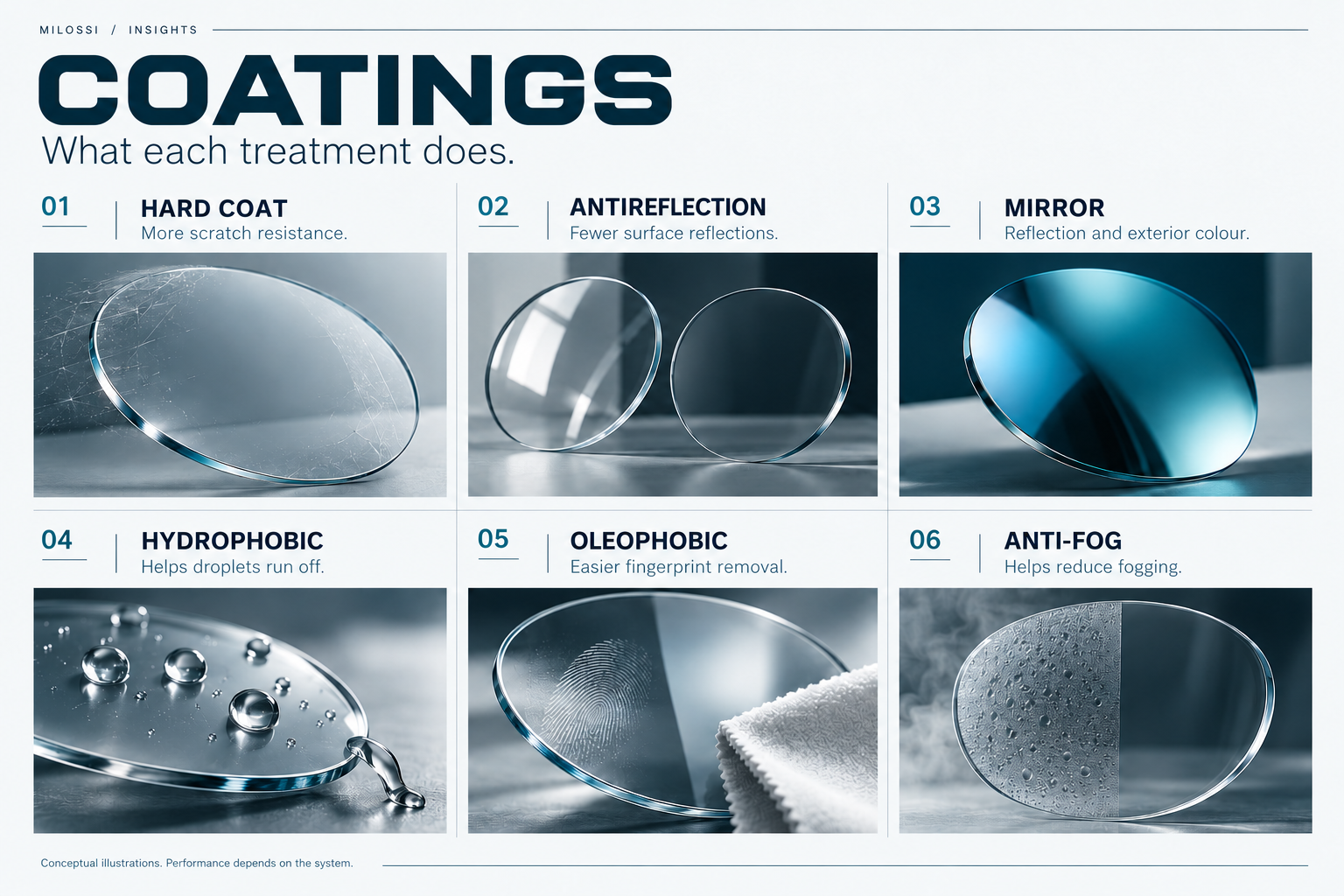
The lens material provides the structure. Coatings modify its surface to address specific problems: scratches, reflections, water, fingerprints or fogging. Their value depends on what they do and how they withstand use, not on the number of layers listed in a brochure.
| Treatment | What it offers | A limitation to explain |
|---|---|---|
| Hard coat | Increases surface scratch resistance. | Does not make a lens scratch-proof or unbreakable. |
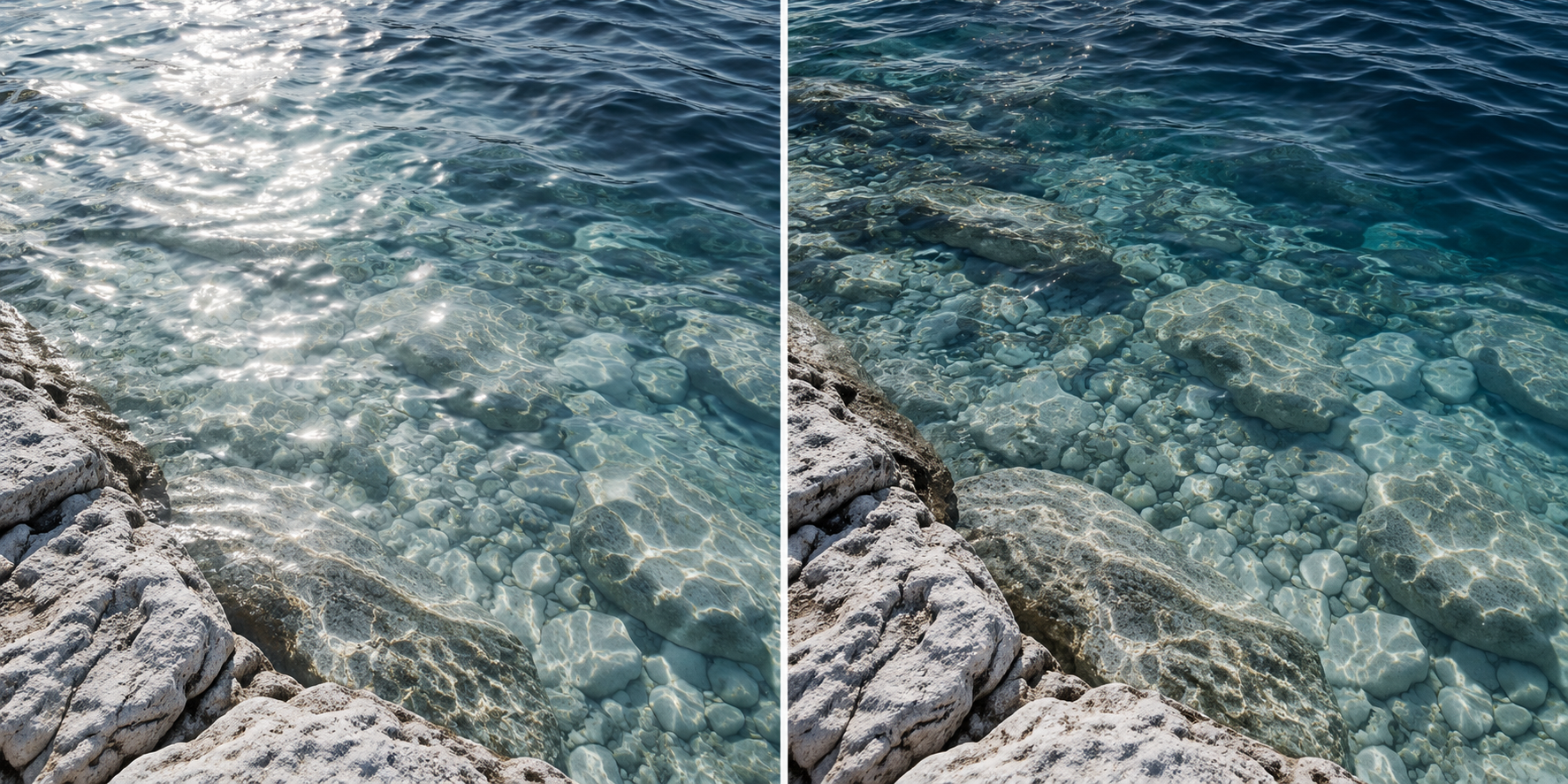
| Antireflection / AR | Reduces surface reflections; particularly useful on the rear surface of sun lenses. | Does not replace polarisation, which acts on light reflected by the surroundings. |
| Mirror coating | Reflects part of the light and creates an exterior finish, from a subtle flash to a strong mirror. | Does not by itself demonstrate UV protection or a filter category. |
| Hydrophobic | Reduces water adhesion and helps droplets run off. | Does not automatically prevent condensation. |
| Oleophobic | Makes grease and fingerprints easier to remove. | Reduces adhesion; the lens still needs cleaning. |
| Anti-fog | Helps maintain vision when moisture condenses on the surface. | May require care or activation and has limits in extreme humidity or temperature changes. |
These functions are combined in systems compatible with the substrate. Not every finish can be freely added to every material. [1] [2]
How coatings are applied
1. Preparation and hard coating
The surface is cleaned and prepared for proper adhesion. A hard coat can be applied by immersion — dip coating — or by distributing a formulation over a rotating lens — spin coating. It is then cured with the thermal or UV process specified for the system. Satisloh offers both routes; not every lens layer is deposited in a vacuum. [3]
2. Optical layers in a vacuum
Many antireflection and mirror coatings use thin-film deposition in a vacuum chamber. The sequence of materials and their thicknesses control the optical response. AR aims to reduce certain reflections; an interference mirror reinforces others. This explains why changing composition or thickness can change the reflected colour. [4]
Some equipment uses ion assistance to improve layer properties. Repeatability requires control of the process, cleanliness and substrate compatibility. An attractive sample colour alone cannot predict how the coating will age. [5]
3. Surface finishes
Hydrophobic and oleophobic top coats simplify maintenance. Anti-fog works differently: some hydrophilic systems, for example, help condensation spread as a less obstructive film. Care instructions must match the actual treatment: a product or cloth suitable for one lens may not suit another. [2]
What “REVO coating” means
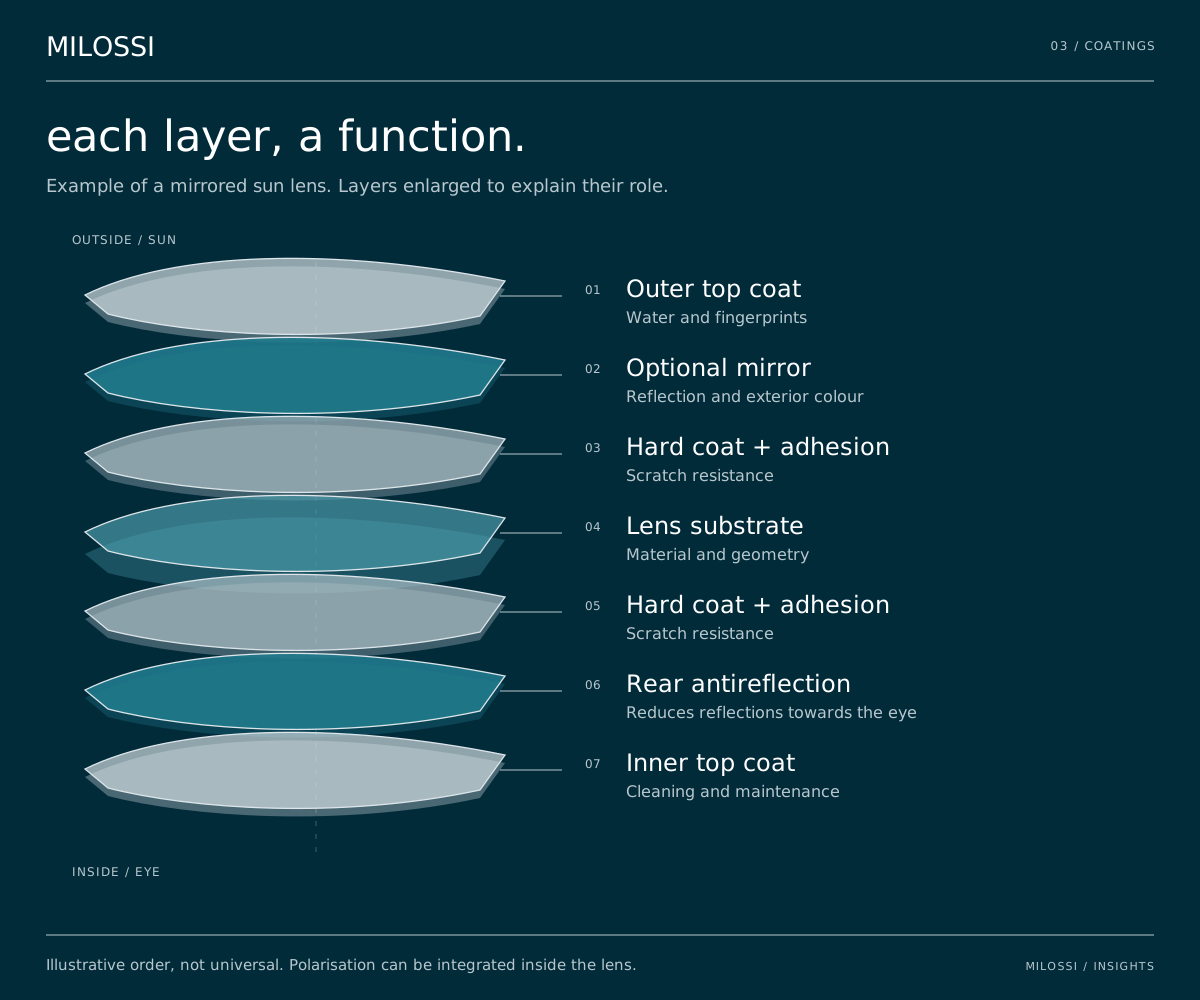
Two uses of the term need to be separated. Revo is a brand with its own technologies, including its Light Management System. Its documentation describes combinations of material, polarisation, mirror coating and rear antireflection. According to the brand’s history, its origins are linked to coatings developed for space technology. [6] [7]
At the same time, some supplier catalogues use names such as “Revo Red” or “Revo Blue” for coloured mirror finishes. Japan Eyewear provides examples of this terminology. The label alone does not prove that a product uses authentic Revo-brand technology, nor does it define composition, layer count or durability. [8]
For a MILOSSI specification, we would describe the finish as a “coloured multilayer mirror coating” and add manufacturer, reference, approved sample, treated surface and transmission requirements. We would use Revo when discussing an identified authentic product or explaining the market term. One supplier’s recipe should not be presented as the recipe for the whole industry.
Which combination we would choose for each project
- High-end everyday use: hard coating suited to the material, rear antireflection and easy cleaning. The mirror finish follows the aesthetic direction and final transmission.
- Sport with rain, sweat or splashes: prioritise surface resistance and water shedding. Also validate the complete system in that environment.
- Environments with fogging risk: assess anti-fog alongside ventilation, distance from the face and, where relevant, shield construction. The coating alone does not solve the eyewear design.
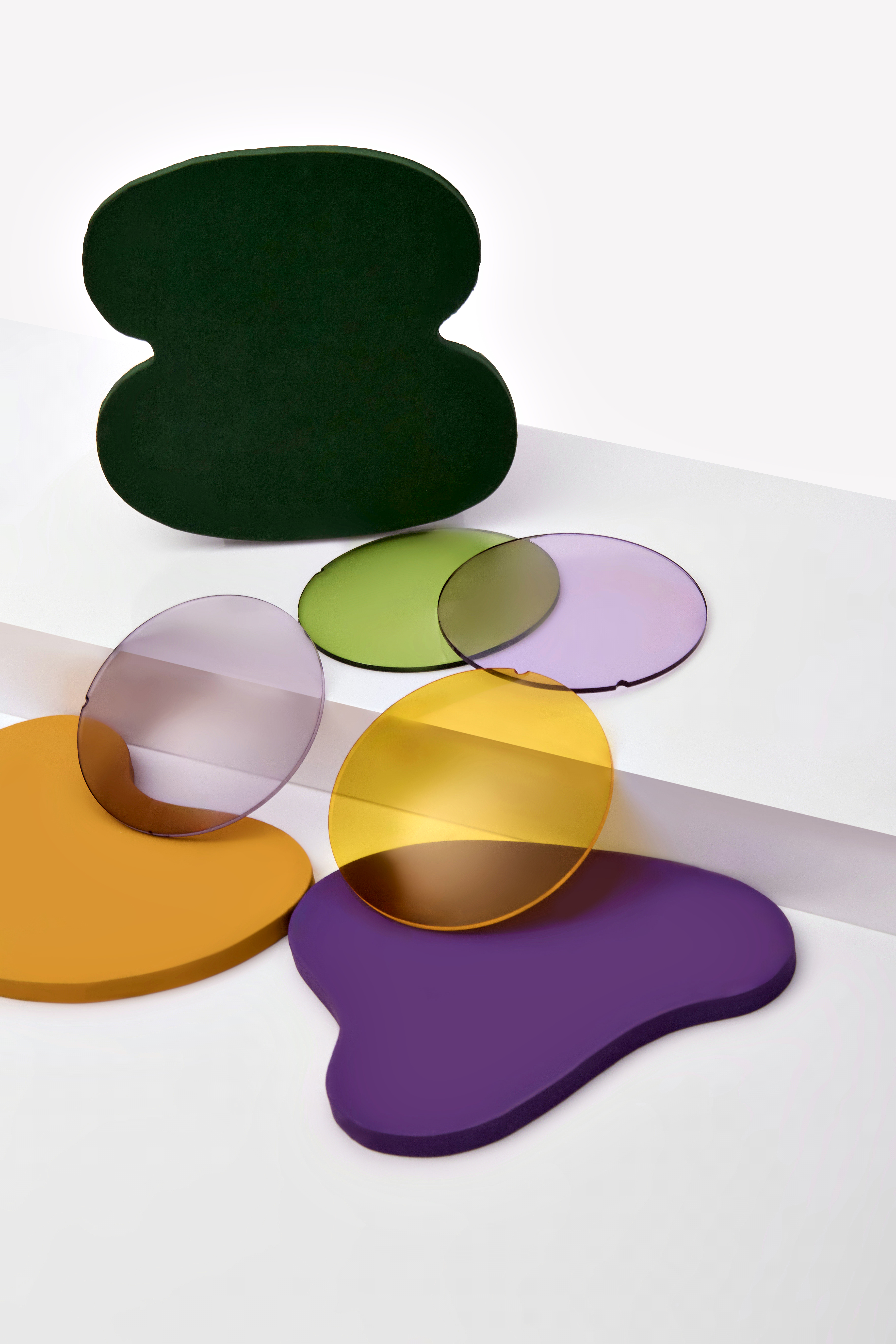
- Collection colours: approve samples under defined lighting, viewed both from outside and through the lens. A blue mirror does not mean seeing a blue world.
Before production, we would request results for adhesion, abrasion, humidity and temperature exposure, colour uniformity and transmission. Also provide cleaning instructions that users can follow. Agreeing measurable performance is more useful than simply requesting “the best coating”.
Three concepts that should not be confused
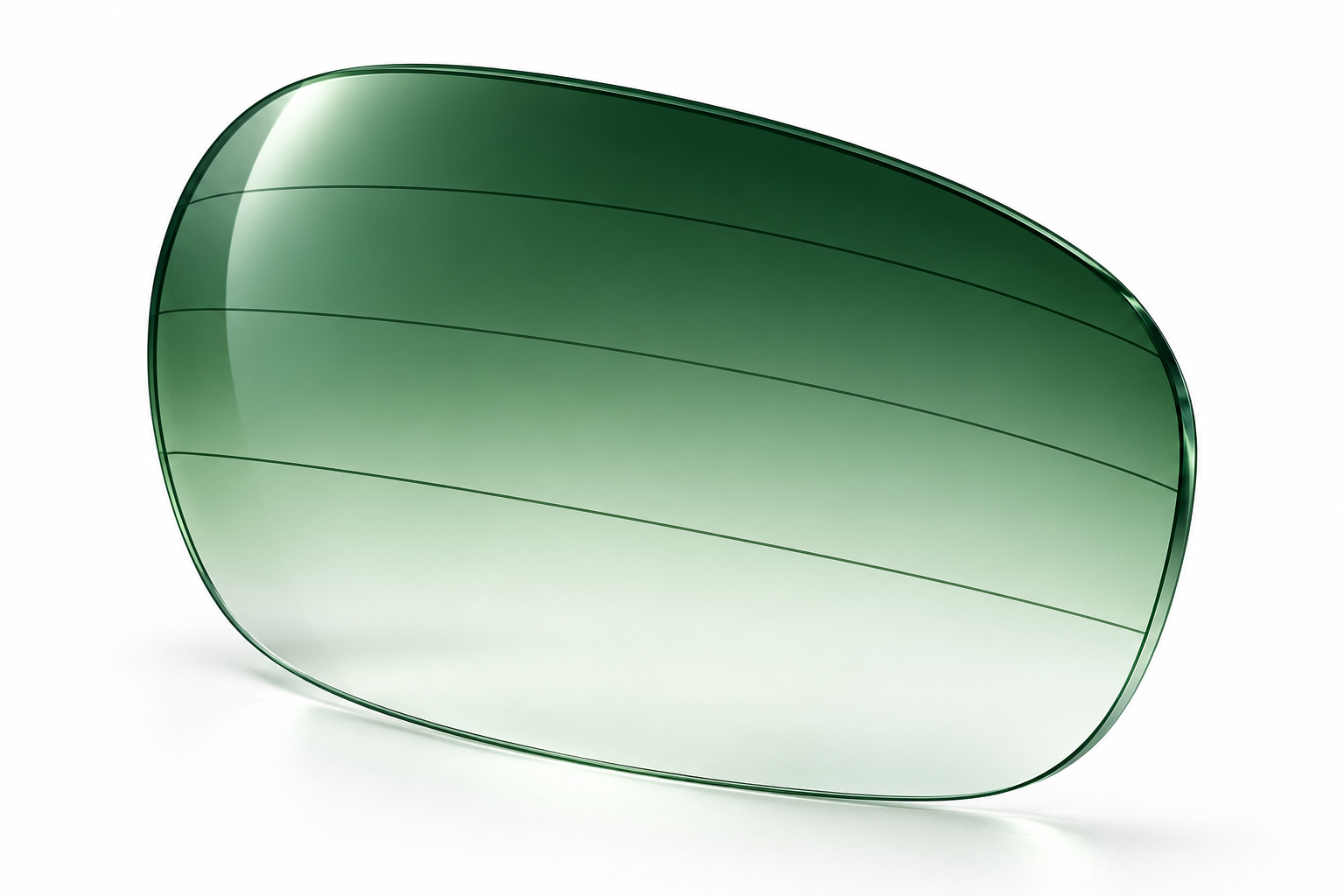
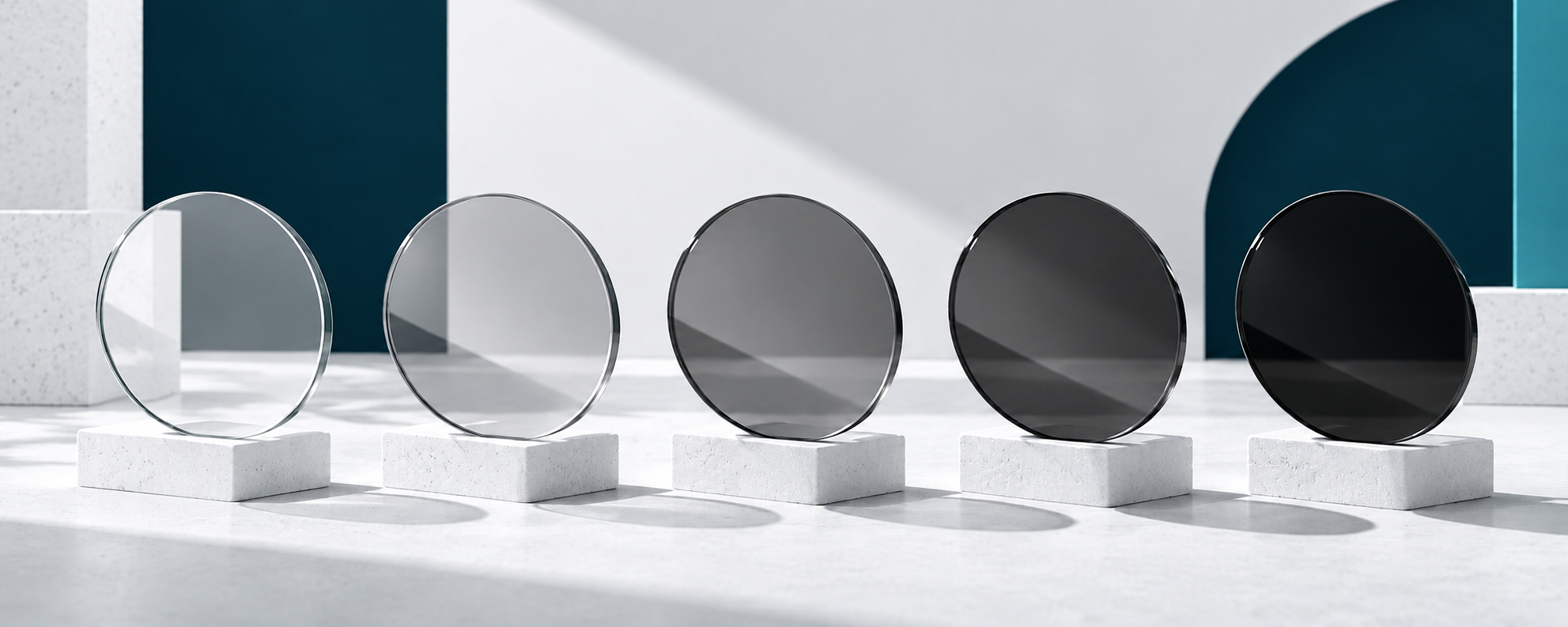
Tint: changes transmitted light and colour perception. Mirror coating: mainly changes external reflection and can also affect transmission. Polarisation: selectively attenuates certain orientations of light. A lens can combine all three, but none guarantees the others. [9] [10]
Technical sources
Product specifications describe the cited range. Confirm the selected lens, frame and treatments with the supplier.
- ZEISS Sunlens · Functional coatings ↗
- Zenni Optical · Anti-fog care ↗
- Satisloh · Coating systems ↗
- ZEISS Innovation 17 · Optical interference ↗
- ZEISS · DuraVision coatings ↗
- Revo · Technology ↗
- Revo · Brand history ↗
- Japan Eyewear · TAC sheets and coatings ↗
- ZEISS · Tinting lenses ↗
- European Patent Office · TAC–PVA–TAC, EP3871866B1 ↗
© 2026 MILOSSI SRL · Editorial edition. Rights reserved. Reproduction of protected content requires authorisation, except for uses permitted by law. For quotations and references: credit MILOSSI and link to the original article.