LIVO EXAGONALE
PACKAGING DESIGN / MILOSSI
NATURE KNOWS.WE LISTENED.
A honeycomb-inspired eyewear case. Designed with the LIVO team in São Paulo, Brazil, to protect a pair of glasses and become part of something bigger.
Follow the process ↓INSPIRED BY THE HONEYCOMB
Protect
what matters.
For the bees, honey.
For us, the glasses we live in.
COLLABORATION
MILOSSI × LIVO
With the LIVO team in São Paulo, Brazil
PROJECT SCOPE
Concept & form exploration · Packaging design · Physical mock-ups · 3D development · Colour and finish exploration
01 / THE OPPORTUNITY
The case is part of the product.
A carefully designed pair of glasses deserves an equally considered case. With LIVO, we saw an opportunity to give this everyday object a recognisable identity: something people would keep, use and collect alongside their eyewear.
The starting point was a honeycomb. Bees store honey in repeated cells; we translated that image of care into a case for something people value and carry every day. One case protects one pair. Several cases suggest a larger, organised system.
02 / RESEARCH & FORM EXPLORATION
Look at the cell. Think about the whole.
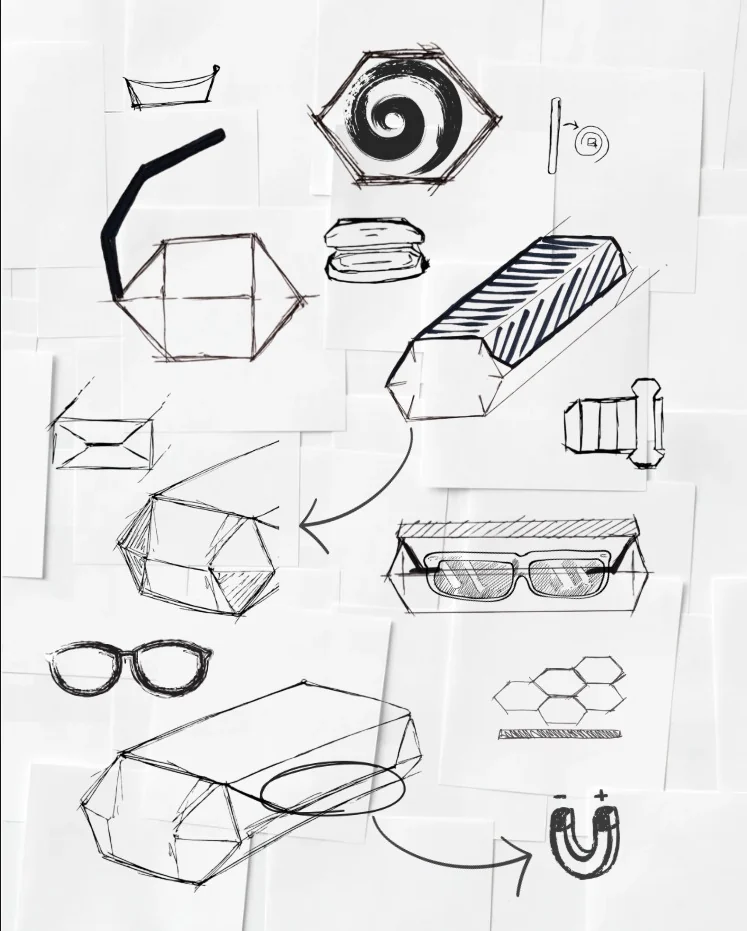
The honeycomb reference brought together three ideas: an enclosing shape, surfaces that meet and a module that can repeat. The sketch board connects the hexagonal end profile to the glasses inside, the opening movement and the possibility of grouping several cases.
The project’s section is an adapted, elongated hexagon. Its proportions follow the eyewear case rather than a literal copy of a regular honeycomb cell. The drawing explores where the lid meets the body and how the side panels complete the volume.
The archive also includes an exploration of a magnetic closure. At this stage, sketches let different construction ideas coexist before they are resolved in a physical object.
Why the honeycomb? A geometry note
Regular hexagons tile a plane without gaps. Hales’s honeycomb theorem establishes their minimum-perimeter property for partitions into equal areas. This provides useful context for the inspiration; Exagonale uses an adapted profile and an independent wall around each case.
Thomas C. Hales — The Honeycomb Conjecture ↗
Background reference for this case study’s explanation of the form.
03 / PHYSICAL EXPLORATION
A fold makes the idea tangible.
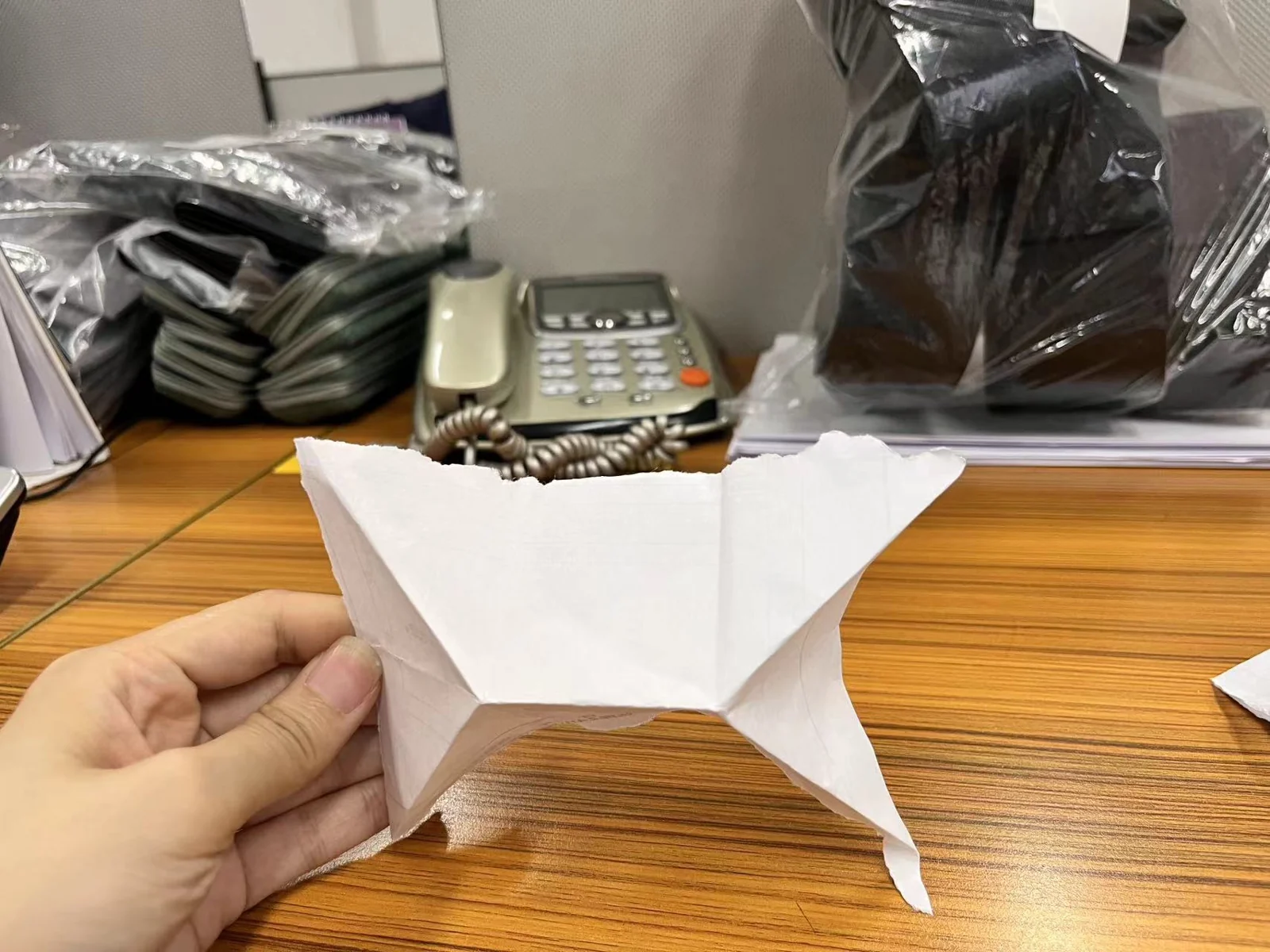
The paper and cardboard mock-ups move the project off the page. Folding a flat piece into a volume makes the relationship between the long body, the angled ends and the opening visible in the hand.
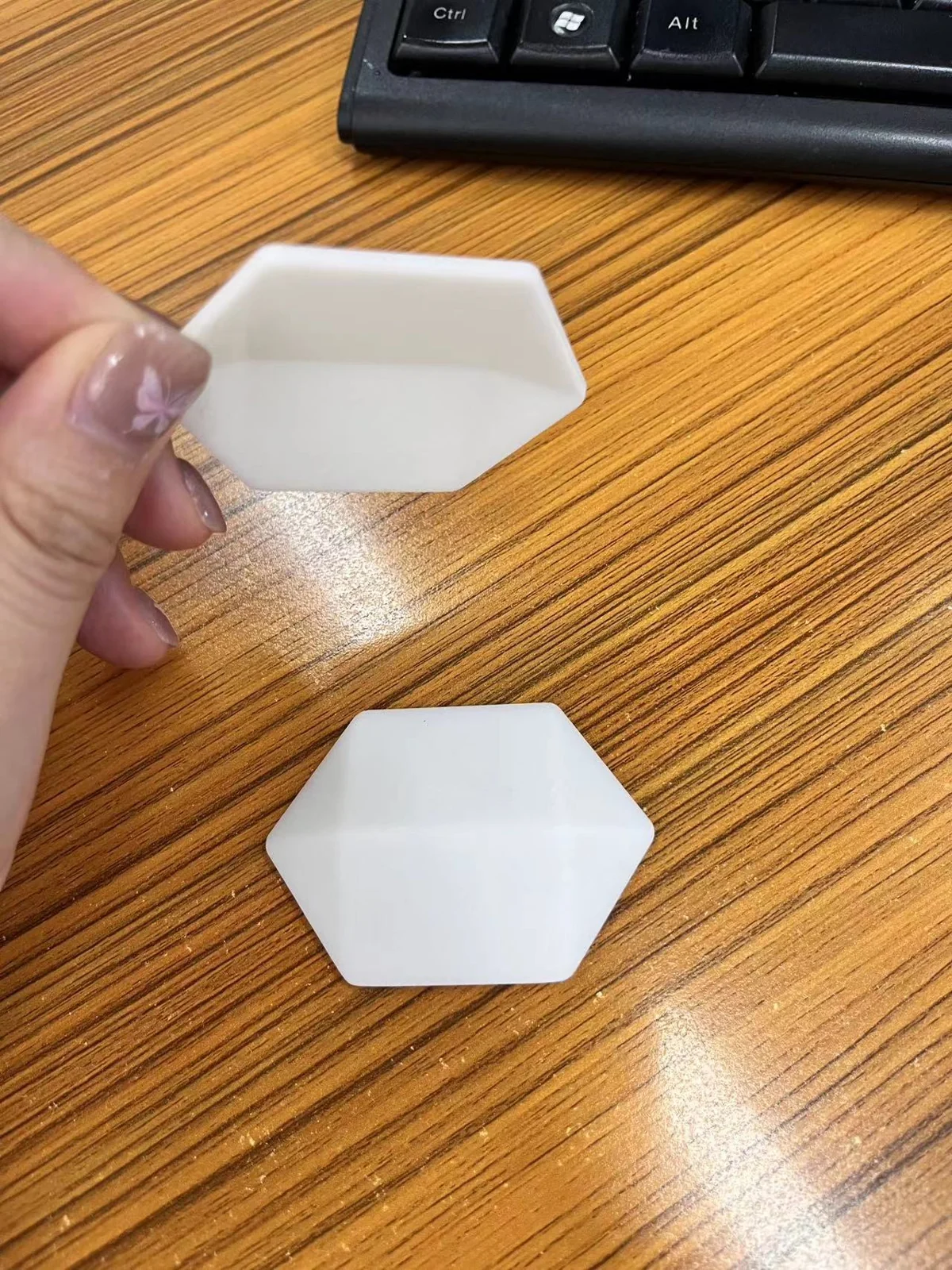
The separate end pieces show another part of that investigation: how to form the hexagonal profile and give the case a defined edge. These early objects reveal the construction questions behind the clean exterior.
THE CONSTRUCTION QUESTION
How does a flat surface become a protective volume?
The fold, the end panel and the lid have to work together. The mock-ups make those relationships visible.
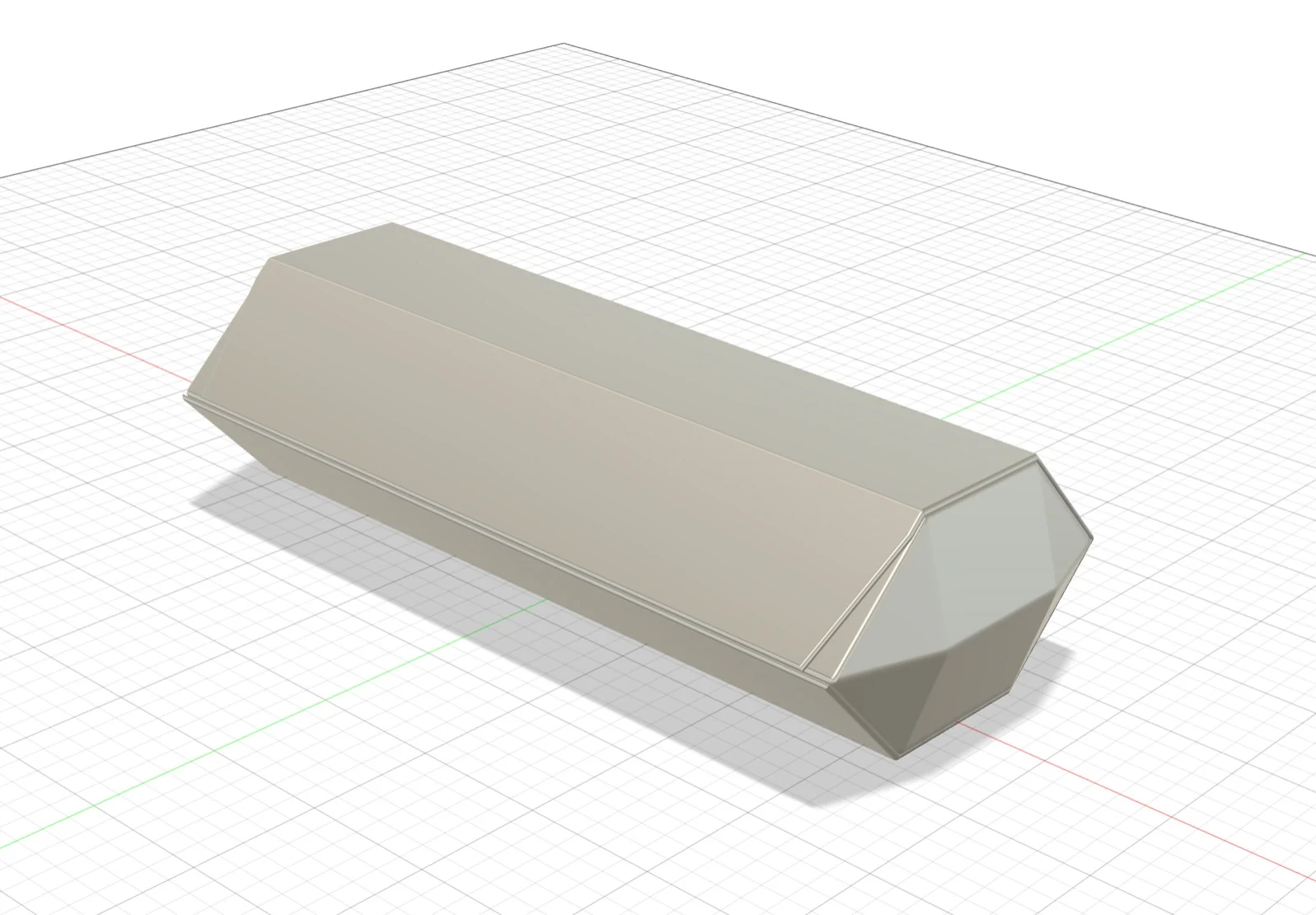
04 / 3D & CONSTRUCTION
Every face has a job.
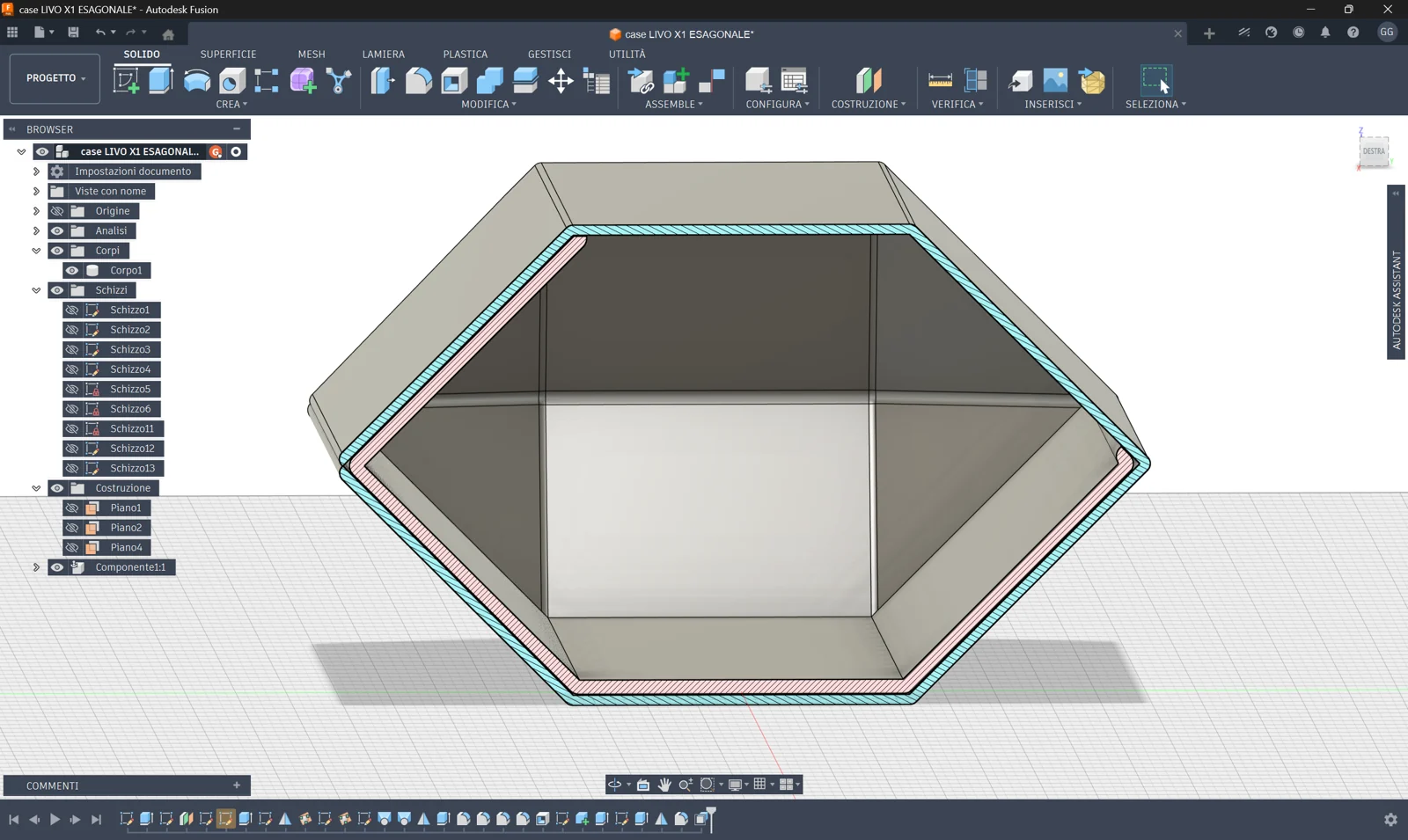
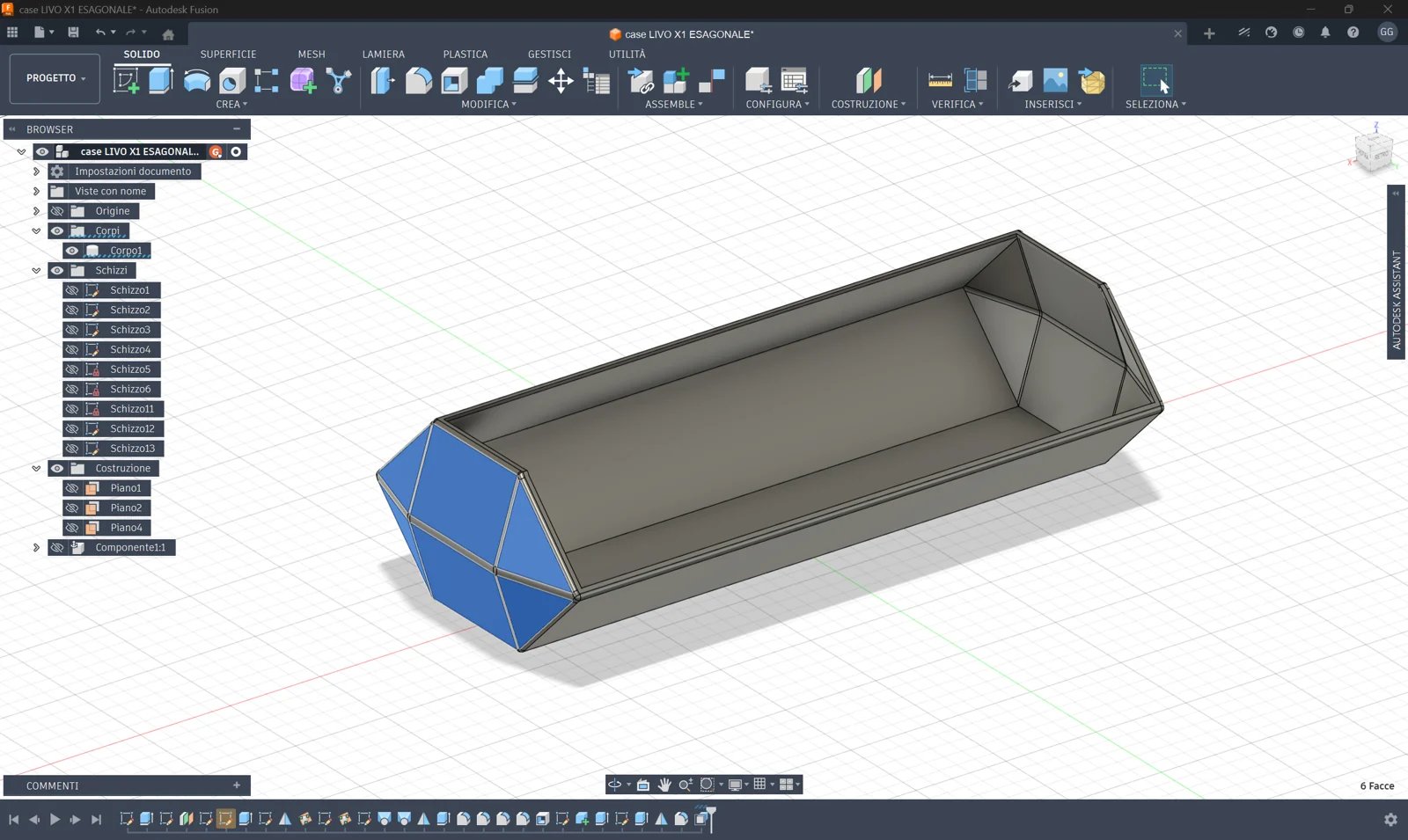
The digital model brings the body, end panels and lid into the same geometry. Perspective views describe the overall object; the open tray and sectional views expose the construction beneath its outer surface.
Across these views, the design work centres on the opening, the thickness of the enclosure and the relationship between its inner and outer layers. The recognisable silhouette has to remain coherent when the case is open as well as closed.
05 / COLOUR & PHYSICAL SAMPLES
One silhouette. Several expressions.
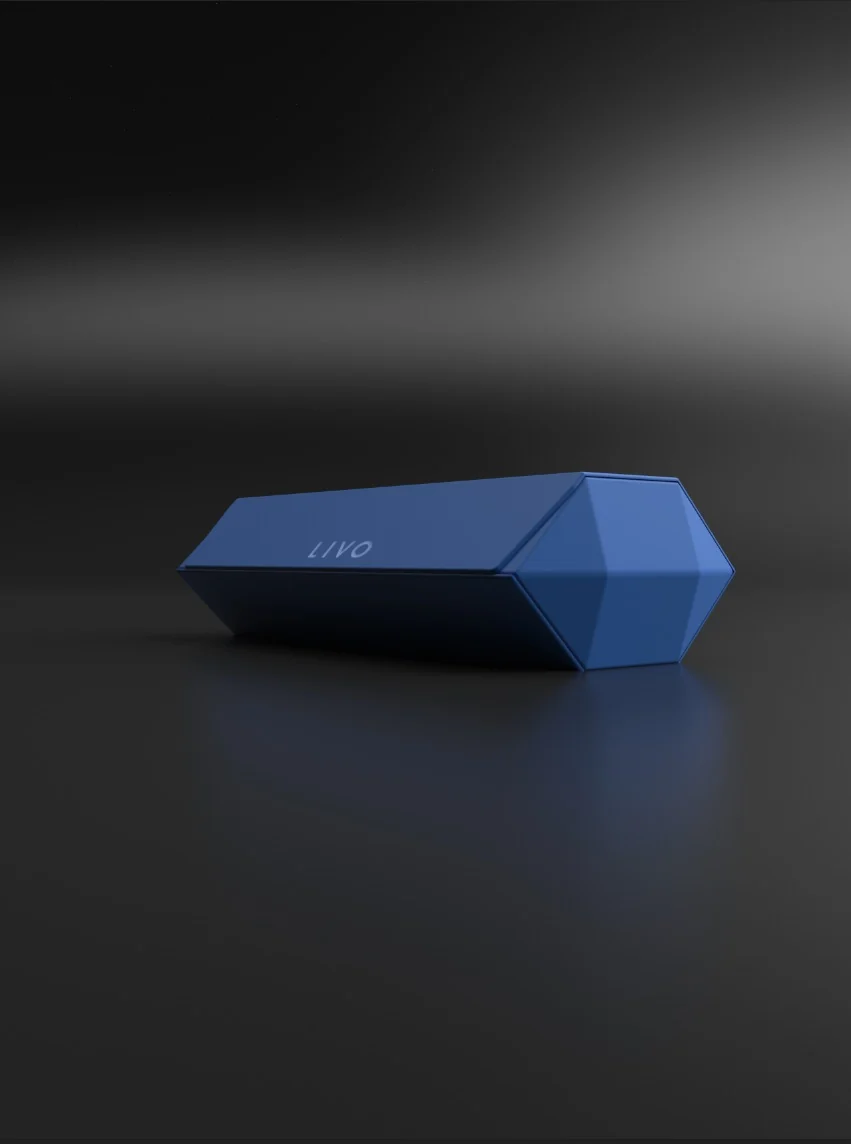
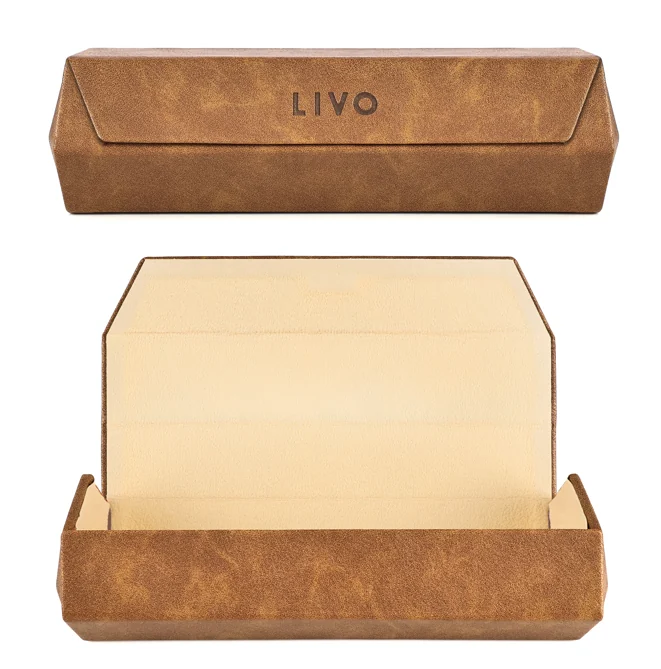
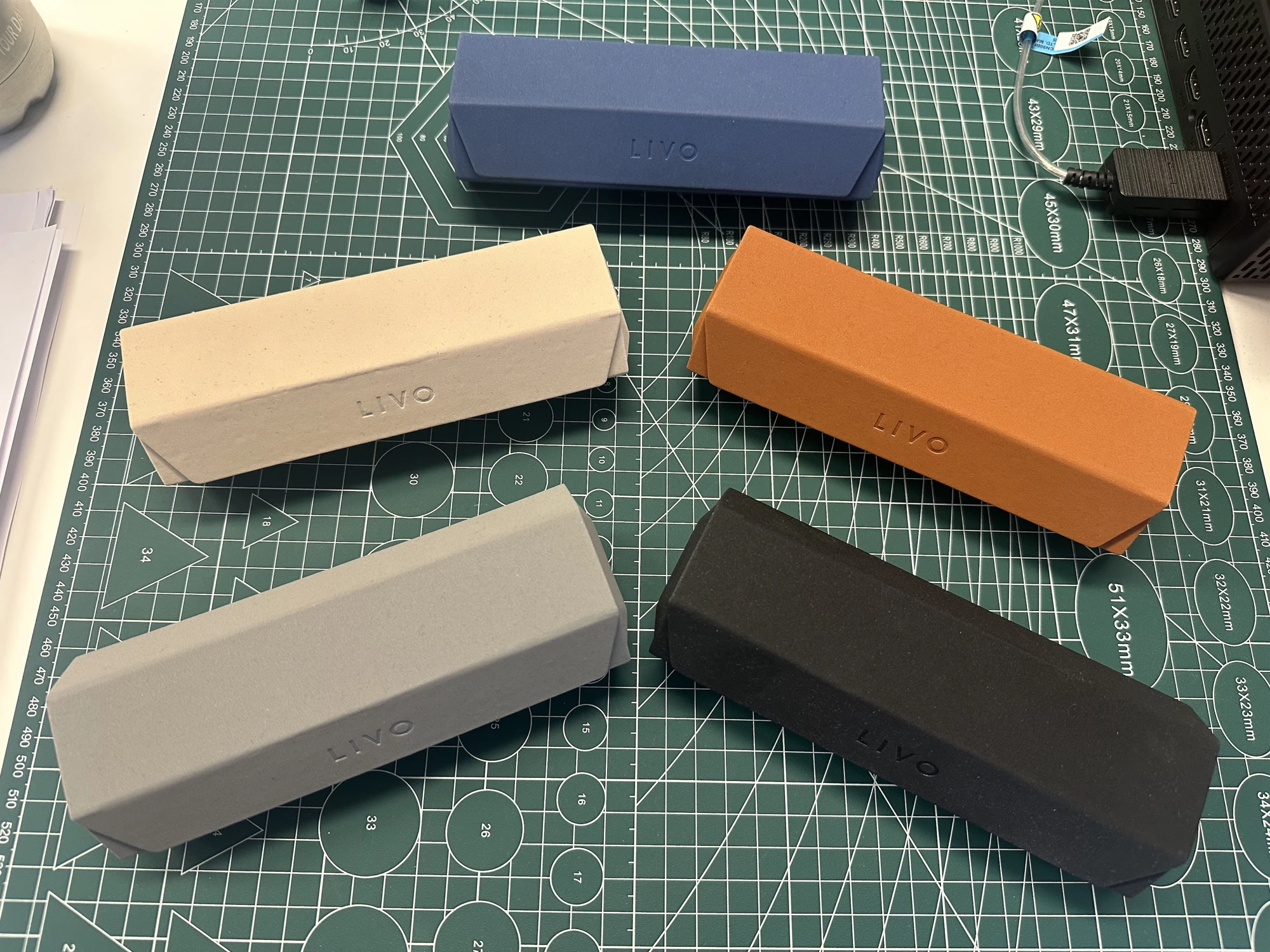
Together on the workbench, the cases form a family: blue, cream, orange, pale grey and black. The same planes take on a different character in each colour, while the LIVO mark sits quietly on the front flap.
The blue rendering gives that geometry a stronger graphic presence. The warm-toned open-and-closed view shows the contrasting interior and the full opening. Together, the samples and visualisations tell the story of a form developed beyond a single image.
06 / THE SYSTEM IDEA
A case that thinks in multiples.
Exagonale was conceived as a stackable system. The hexagonal section offers a way to arrange units together, extending the idea from an individual case to a collection of cases.
That is the lasting idea borrowed from the honeycomb: designing the cell and the relationship between cells at the same time. An object with its own identity, and a geometry that invites repetition.
MILOSSI × LIVO / SÃO PAULO, BRAZIL
A little architecture
for everyday life.
From the first hexagonal outline to folded mock-ups, digital models and physical samples, Exagonale brings the care of product design to the object that carries the product.
Developed by MILOSSI in collaboration with the LIVO team in São Paulo, Brazil. Sketches, construction studies, renders and sample photographs from the project archive. The repeated-profile diagram illustrates the system concept.